What's the Difference Between Fixed and Mechanical Broadheads?
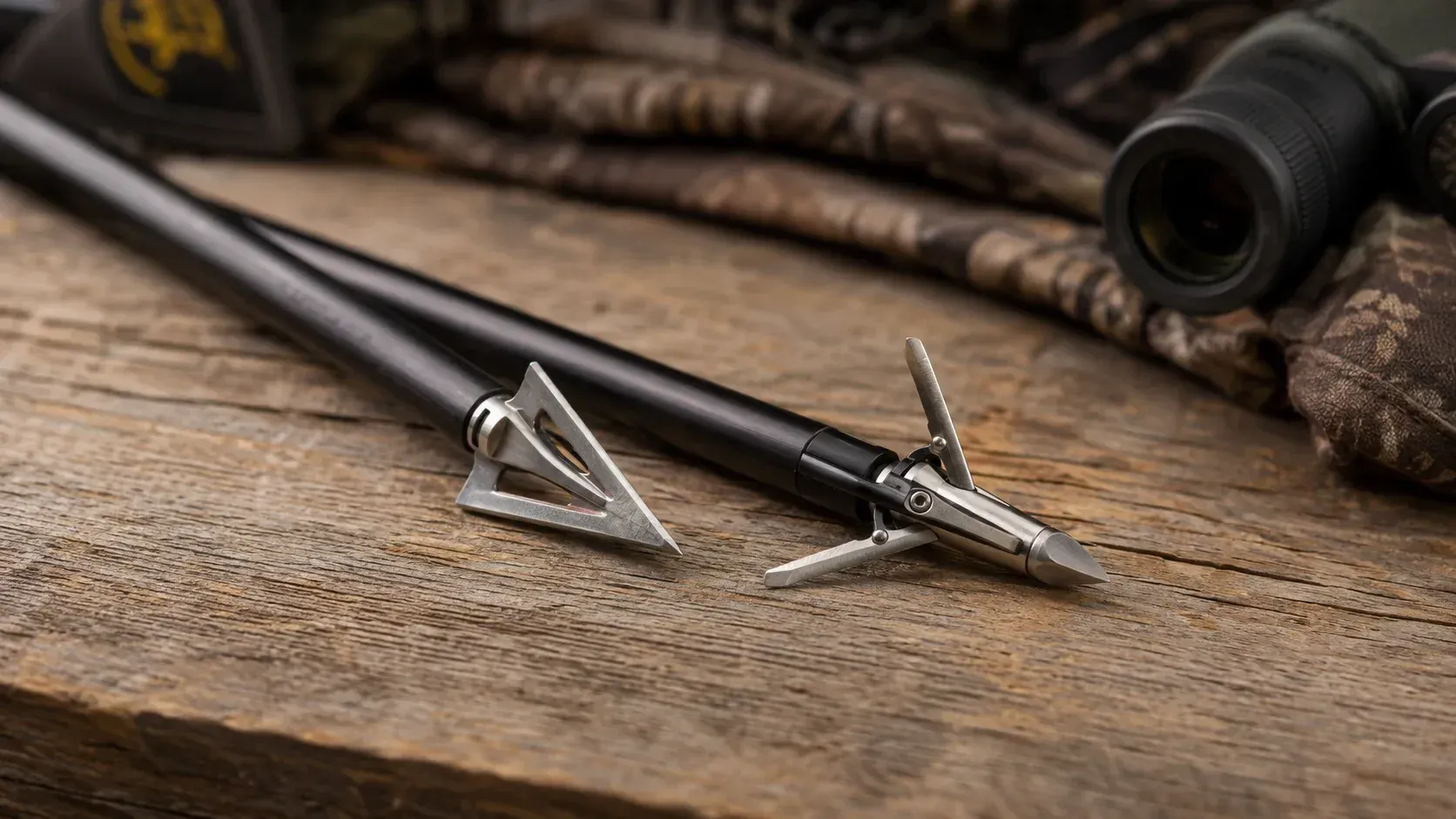
Table of Contents
- Direct Answer: The Core Difference
- How Fixed Blade Broadheads Work
- How Mechanical Broadheads Work
- Fixed vs Mechanical: Side-by-Side Comparison
- Decision Framework: Which One Fits Your Setup
- Conclusion
- Frequently Asked Questions
Key Takeaways
- Fixed blade broadheads have blades permanently exposed and locked in place, while mechanical broadheads keep blades folded until impact triggers them open, and that single design difference drives nearly every other performance tradeoff between the two.
- Fixed heads generally fly more like field points at longer distances because they don't rely on a moving part, while mechanical heads often fly flatter and more consistently at typical hunting ranges due to less wind planing in flight.
- Mechanical broadheads tend to cut a larger diameter wound channel on a clean hit but require more kinetic energy to open reliably, which makes bow setup and draw weight more important with mechanical heads than with fixed blades.
- Fixed blade heads are generally more forgiving on marginal hits and less prone to mechanical failure, since there's no moving part that can fail to deploy.
- Neither option is universally better. The right choice depends on your bow's draw weight, the game you're hunting, your accuracy at your effective range, and state or local hunting regulations that sometimes restrict blade type.
Introduction
The core difference between fixed and mechanical broadheads is how the blades are held and deployed. Fixed blade broadheads have their cutting blades permanently exposed and rigidly attached to the ferrule, so the head cuts on impact exactly as it flies through the air. Mechanical broadheads, often called expandable broadheads, keep their blades folded closed in flight and only open on impact, typically triggered by contact with the animal. This difference affects flight consistency, wound channel size, penetration depth, and how forgiving each head is on a less-than-perfect shot, which is why the choice matters well beyond personal preference. If you're weighing options before your next hunting season, Southern Oregon Archery's pro shop carries both blade types, and staff can walk through which one pairs better with your current bow setup.
This article breaks down how each broadhead type actually functions, compares them directly across the factors that matter most to hunters, and works through a practical framework for deciding which one fits your equipment and hunting situation. It also covers points that generic broadhead comparison articles often gloss over, including how draw weight interacts with mechanical reliability and what typically goes wrong on a marginal hit with each type.
How Fixed Blade Broadheads Work
Direct Answer: A fixed blade broadhead has blades permanently welded, bonded, or bolted to the ferrule in an open cutting position, so the head is always in its final cutting shape from the moment it leaves the bow.
Because there's no moving part, a fixed blade head behaves in flight much like a field point, provided the bow is properly tuned. The blades do create more surface area exposed to air than a field point, which means fixed heads are somewhat more sensitive to wind drift and to imperfect arrow spine or fletching than a bare field point would be, but they don't rely on a mechanism functioning correctly on impact.
Fixed heads are typically categorized further by blade count (two, three, or four blade designs) and by whether they're one-piece or replaceable-blade construction. Two-blade designs tend to penetrate deeper due to less surface resistance, while three and four blade designs create a larger initial wound channel at the cost of some penetration depth.
How Mechanical Broadheads Work
Direct Answer: A mechanical broadhead holds its blades closed against the ferrule using a retention system such as a band, pin, collar, or clip, and impact force overcomes that retention to swing the blades open, typically creating a cutting diameter larger than the head's closed profile.
Because the blades stay folded in flight, mechanical heads present less surface area to the air, which is the main reason many archers find them fly more consistently like a field point at typical hunting distances, particularly when the bow isn't perfectly tuned. The tradeoff is that opening the blades consumes kinetic energy on impact, energy that would otherwise go toward penetration. This is why draw weight and arrow kinetic energy matter more with mechanical heads: a setup with marginal energy for the animal being hunted may not have enough force left after blade deployment to achieve adequate penetration.
Mechanical heads are further split into rear-deploying and over-the-top designs, which affects how and when the blades open relative to the point of impact, along with single-bevel versus dual-bevel blade geometry that affects how the head behaves as it passes through tissue and bone.
Fixed vs Mechanical: Side-by-Side Comparison
| Factor | Fixed Blade | Mechanical |
|---|---|---|
| Flight consistency | Good with proper tuning; more surface area affects wind drift | Often flies flatter and more field-point-like at typical range |
| Penetration | Generally deeper due to no energy lost opening blades | Requires more kinetic energy; can underperform on low draw weight setups |
| Wound channel | Smaller on entry, consistent throughout | Often larger cutting diameter on a clean hit |
| Reliability | No moving parts to fail | Depends on retention system and impact angle; can occasionally fail to open |
| Forgiveness on marginal hits | Generally more forgiving; cuts regardless of hit angle | Less forgiving if blades don't deploy fully on an angled or glancing hit |
| Regulatory considerations | Legal in all states; no minimum cutting diameter concerns | Some states restrict or regulate mechanical heads differently |
| Cost | Often less expensive, especially one-piece designs | Typically higher cost due to moving parts and replacement blade systems |
Decision Framework: Which One Fits Your Setup
Use this sequence to work through the decision rather than defaulting to whichever type is more popular locally.
- Confirm your bow's kinetic energy at your effective hunting range. If your setup is on the lower end of recommended energy for the game you're pursuing, a fixed blade head is generally the more reliable choice since it doesn't spend energy opening blades.
- Check your local hunting regulations. A small number of states and specific hunts restrict mechanical broadheads or set minimum cutting diameter requirements that some designs may not meet; verify before purchasing.
- Evaluate your bow's tune. If your bow isn't well tuned and you're seeing inconsistent field point groups, a mechanical head's lower wind-planing profile may mask some of that inconsistency better than a fixed head would, though fixing the tune itself is the better long-term solution. A tune-up and range session can confirm whether the issue is your bow's setup or the broadhead itself.
- Consider the game and expected shot angles. Larger or heavier game, and hunting situations where quartering or angled shots are more likely, generally favor the penetration reliability of a fixed blade head.
- Factor in your comfort with equipment failure risk versus wound channel size. This is ultimately a tradeoff between the larger wound channel mechanical heads often produce on a clean hit and the added reliability fixed heads offer when a hit isn't perfectly clean.
Neither path in this framework is inherently correct. It's a matter of matching the head to your specific equipment and hunting conditions rather than following a blanket recommendation.
Conclusion
Fixed and mechanical broadheads differ in one core mechanical way, whether the blades are exposed in flight or deploy on impact, but that single difference cascades into real tradeoffs across flight consistency, penetration, wound channel size, and reliability on imperfect hits. Fixed blades generally offer more consistent penetration and forgiveness with fewer moving parts to fail, while mechanical heads often fly more predictably and can produce a larger wound channel when energy and shot angle line up well. Matching the choice to your bow's kinetic energy, your typical shot distance, the game you're hunting, and your state's regulations will serve you better than defaulting to whichever type is more heavily marketed.
Choose the Right Broadhead in Central Point, OR
If you're deciding between fixed and mechanical broadheads for the upcoming season, it helps to talk through your bow's draw weight and typical hunting distance with someone who can check the numbers against specific head recommendations. Southern Oregon Archery's Central Point shop carries both blade types and can help confirm your setup meets the kinetic energy requirements for whichever broadhead you're considering. If you're outside Central Point, check the service areas to see whether your city is covered.
You can also contact us directly with questions about your specific setup.
Frequently Asked Questions
Are mechanical broadheads legal everywhere?
Most states allow mechanical broadheads, but a small number regulate them differently than fixed blades, sometimes with minimum cutting diameter requirements. Check your specific state's hunting regulations before purchasing for an upcoming season.
Do I need a higher draw weight for mechanical broadheads?
Not necessarily higher, but you do need to meet the broadhead manufacturer's stated minimum kinetic energy, since blade deployment consumes energy that would otherwise go toward penetration. Check your arrow's kinetic energy at your hunting distance against that minimum.
Which broadhead type is better for beginners?
Fixed blade heads are often recommended for newer hunters because there's no moving part that needs sufficient energy to deploy, which reduces one variable when shot placement or setup isn't yet fully dialed in.
Can I use the same broadhead for target practice and hunting?
Practicing with field points of matching weight is common for general practice, but shooting a few rounds with your actual broadhead before the season is worth doing since broadheads, especially larger fixed blade designs, can group slightly differently than field points.
Do mechanical broadheads always open on impact?
Quality mechanical heads matched to adequate kinetic energy generally open reliably on a clean, square hit, but failure to fully deploy is more likely on marginal, angled, or low-energy hits. This is one reason fixed blades are often considered more forgiving on imperfect shots.
Recent Posts