What's the Difference Between a Hunting Compound Bow and a Target Compound Bow?
Table of Contents
- Introduction
- Hunting Compound Bow vs Target Compound Bow
- Axle-to-Axle Length Changes Everything
- Weight, Balance and How Long You Hold It
- Best Compound Bow for Hunting: What Actually Matters
- Target Compound Bow Features You Will Not Find on a Hunting Rig
- Can One Bow Do Both?
- What to Do Before You Buy
- Conclusion
- Get Fitted for Your Next Compound Bow
- Frequently Asked Questions
Key Takeaways
- A hunting bow is short, light and quiet. It gets carried all day and shot once.
- A target bow is long, heavy and stable. It gets shot repeatedly from the same spot.
- Shorter bows are easier to move with. Longer bows are steadier to aim.
- Heavier is better on a shooting line and worse on a mountainside.
- Fit matters more than either category. Draw length is the dimension that decides everything else.
Introduction
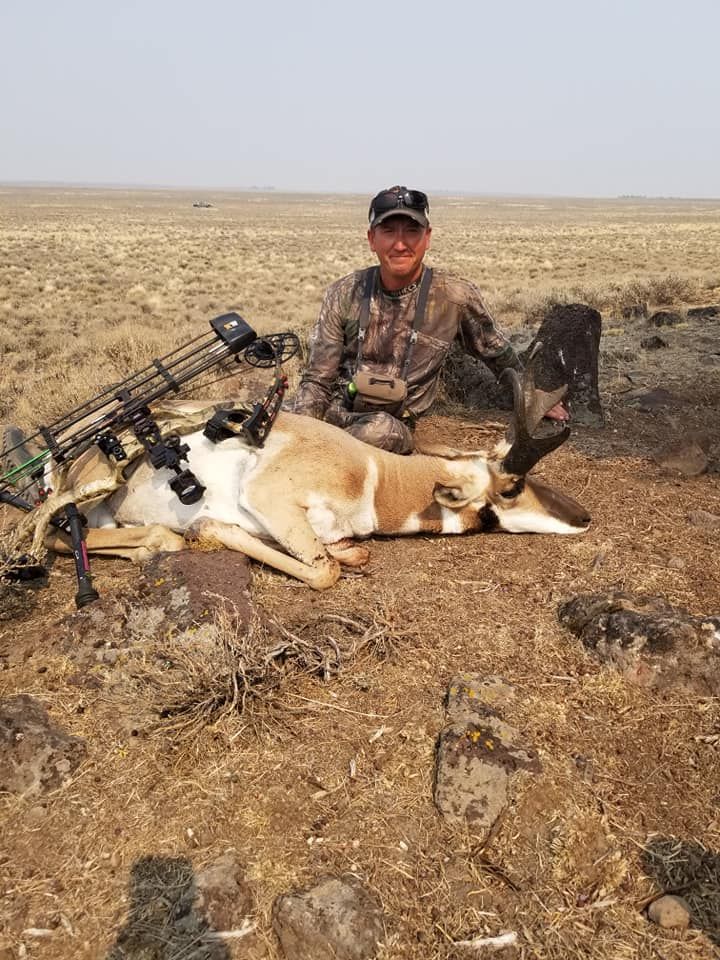
Hunting and target compound bows are built for opposite jobs. A hunting bow has to be carried for hours, stay quiet, fit through brush, and deliver one good shot. A target bow sits in a case until you reach the line, then has to repeat the same shot over and over with no variation.
Almost every design difference comes from that one split. Once you see it, the spec sheets stop looking random.
We carry both, and we fit you to the bow rather than the other way around. Here is how the two differ.
Hunting Compound Bow vs Target Compound Bow
| Hunting bow | Target bow | |
|---|---|---|
| Built for | One shot, unknown distance | Many shots, known distance |
| Length | Shorter | Longer |
| Weight | Lighter | Heavier |
| Priority | Portability and quiet | Stability and repeatability |
| Finish | Camo or subdued | Anything |
| Accessories | Minimal, rugged | Large, precise, adjustable |
Everything below is detail on that table.
Axle-to-Axle Length Changes Everything
Axle-to-axle is the distance between the two cams. It is the spec that separates the two categories most clearly.
Shorter bows are easier to carry, easier to move through brush, and easier to draw inside a ground blind or treestand. The trade is that they are twitchier to hold steady, because there is less bow to resist your wobble.
Longer bows are steadier. More distance between the axles means the bow resists small movements better and holds on target more calmly. The trade is that they are awkward to carry and awkward in tight spaces.
In Southern Oregon timber, that matters. A short, maneuverable rig built for tight-quarters shots is a very different tool from a smooth-drawing target bow optimized for competition.
Weight, Balance and How Long You Hold It
Weight behaves in completely opposite ways depending on what you are doing.
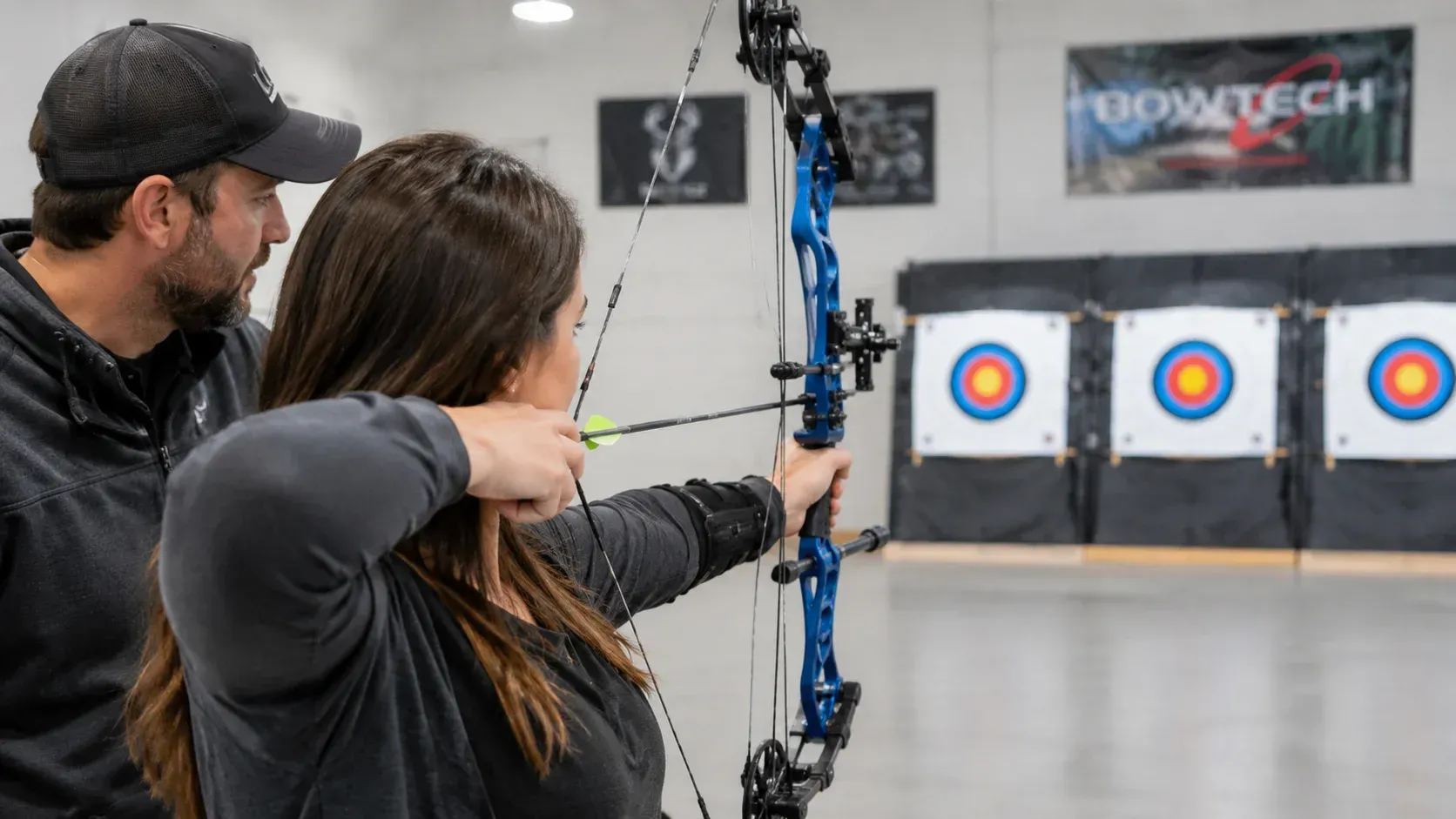
On a shooting line, heavy is good. Mass steadies the bow and dampens your movement. Target shooters often add weight deliberately, with long front stabilizers and side bars.
On a hunt, heavy is a problem. You are carrying it for hours, often uphill, and your arms are tired by the time it matters. Every ounce counts against you.
That is why target rigs look so elaborate and hunting rigs look stripped down. It is not fashion. It is the job.
Best Compound Bow for Hunting: What Actually Matters
Set the marketing aside. These are the things that actually affect your hunt.
- Maneuverability. Can you draw it sitting down, in a blind, wearing layers?
- Quiet. Noise and vibration at the shot matter when the animal is close.
- Carry weight. How does it feel in hour six, not in the shop.
- Draw cycle. A smooth draw you can pull in the cold, from an awkward position, without lurching.
- Second draw. Can you get back to full draw quickly if the first chance passes?
- Durability. It will get rained on, knocked and dragged.
- Finish. Camo or subdued, not bright.
One more that is easy to overlook: you have to be able to draw it smoothly in cold weather, seated, after sitting still for an hour. Plenty of people buy more draw weight than they can actually manage in those conditions.
Oregon also has minimum draw weight requirements for hunting big game. We help customers meet them, and the Oregon Department of Fish and Wildlife is the authority on the current rules.
Target Compound Bow Features You Will Not Find on a Hunting Rig
Target bows carry equipment a hunter would never want in the woods.
- Long front stabilizers with side bars, for steadiness
- Large, precise sights with fine micro-adjustment
- Magnified scopes instead of simple pins
- Heavier risers for mass and stability
- Longer axle-to-axle for a calmer hold
- Bright finishes, because nothing needs to be hidden
Every one of those is a liability on a hunt. They add weight, bulk and noise, and they catch on brush.
Can One Bow Do Both?
Yes, with a compromise. Plenty of people shoot their hunting bow all summer at targets, and that is excellent practice.
Where it gets harder:
- A hunting bow will never be as steady as a dedicated target rig at long distances.
- A target bow is genuinely unpleasant to carry and clumsy in a blind.
- Competitive target shooting rewards equipment you would not take hunting.
The honest answer for most archers: shoot your hunting bow for practice, and only buy a dedicated target bow if you start competing. You should be shooting the bow you hunt with anyway.
What to Do Before You Buy
The category matters less than the fit. Work through this in order.
- Decide what you will actually do with it this year. Be realistic.
- Get your draw length measured. This is the single most important fit dimension in archery.
- Find a draw weight you can pull smoothly and hold steadily, not the heaviest you can yank back once.
- Shoot it before you buy it. Specs do not tell you how a bow feels.
- Budget for the setup, not just the bow. Rest, sight, peep, D-loop and arrows all add up.
- Ask what is included. We install and tune everything before the bow leaves our hands, and our bow setup package starts at $42.50 with full accessory installation.
- Shoot it again after setup, at the distances you will actually use.
The right bow fits your draw length, holds steady when you are tired, and is set up properly. A perfectly chosen model that does not fit will shoot worse than a modest one that does.
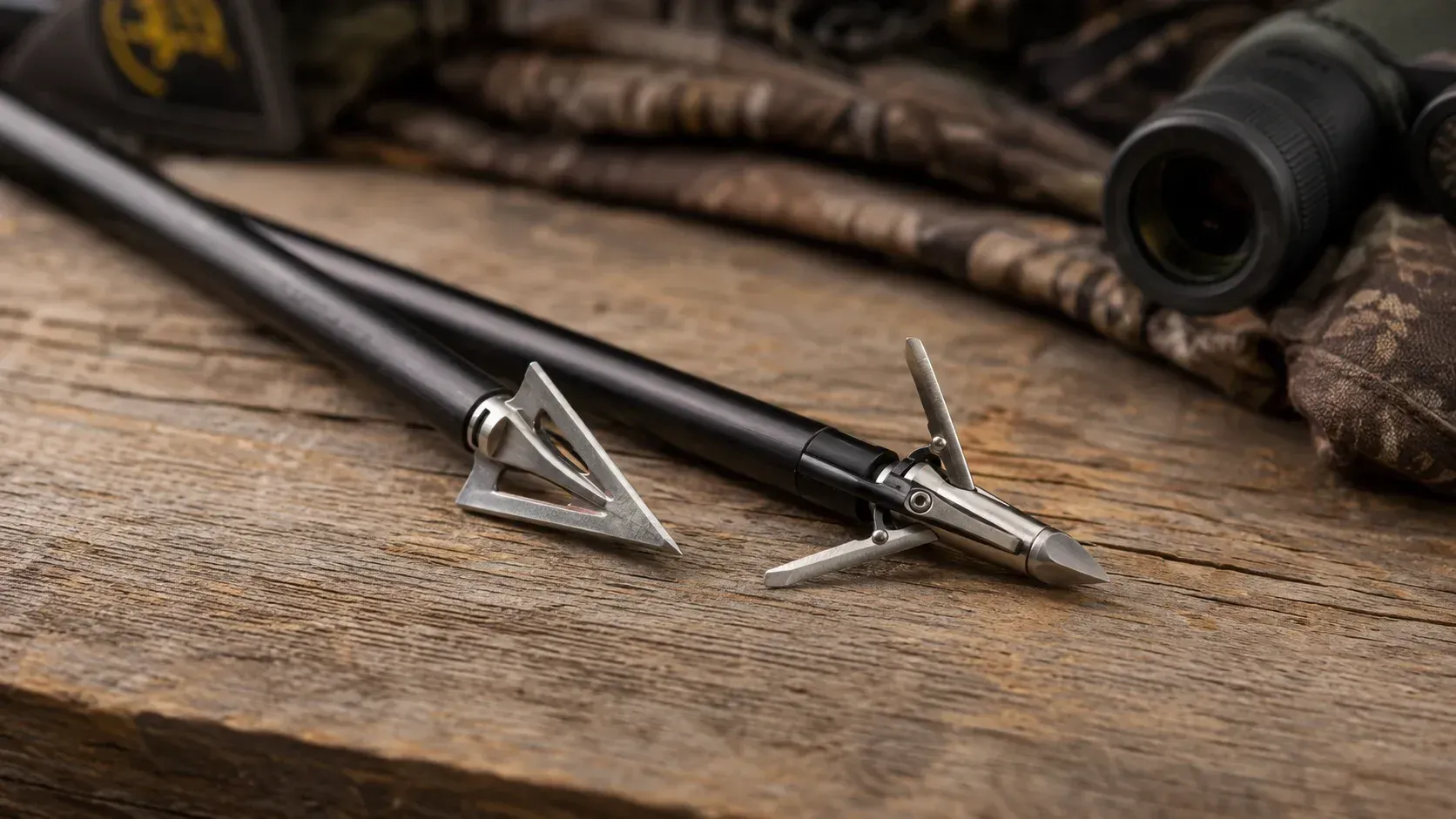
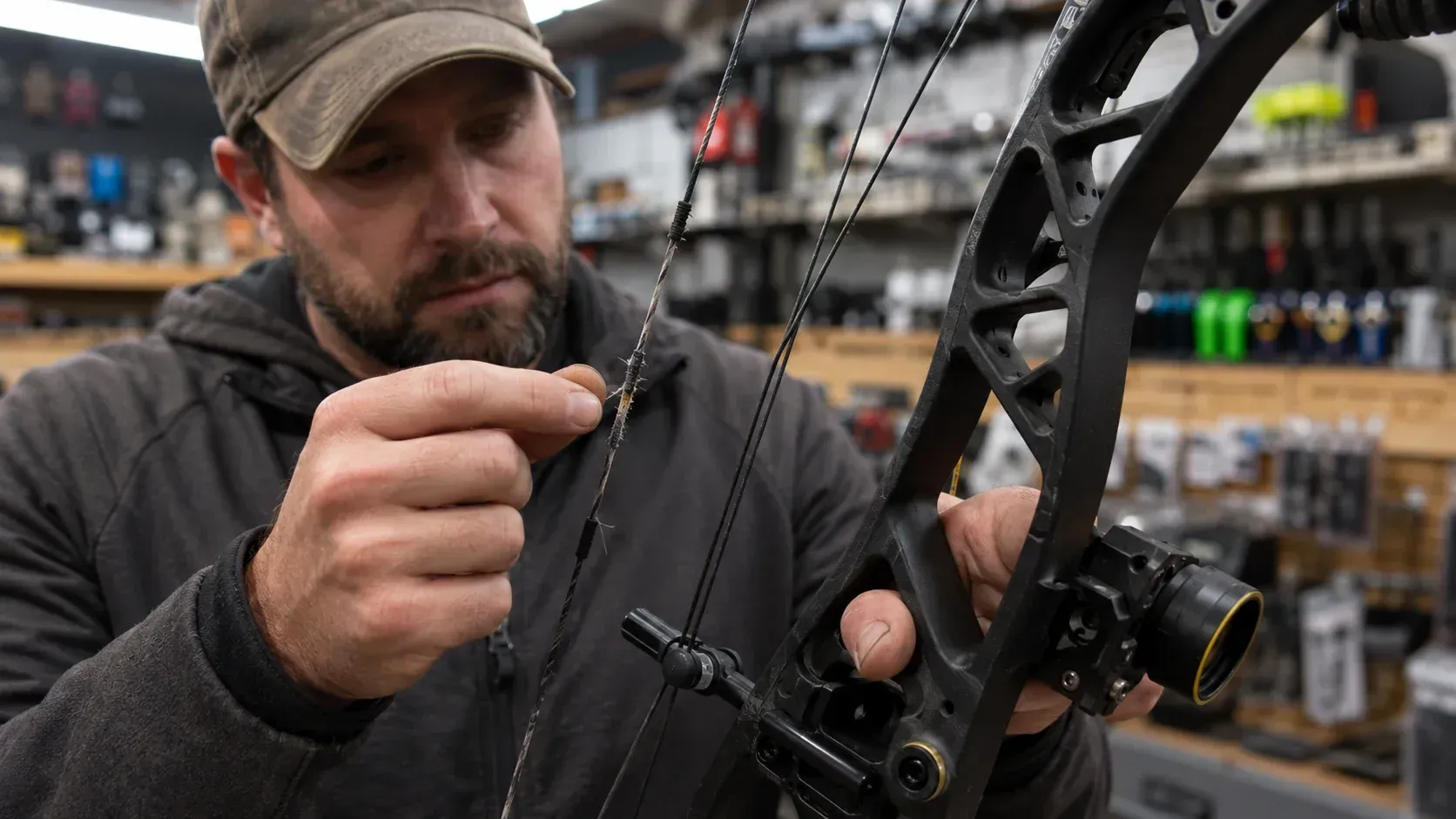
Arrows and broadheads deserve the same thought. Fixed versus mechanical broadheads covers that choice, and the parts of your bow that wear out is worth knowing before the season rather than during it.
Conclusion
A hunting bow is built to be carried and shot once. A target bow is built to stand still and repeat. Short and light against long and heavy, and almost every other difference follows from that.
Most archers are better served by one well-fitted hunting bow than by two compromises. Get the draw length right, pick a weight you can manage when you are cold and tired, and have it set up and tuned properly.
Then go shoot it, before you need it.
Get Fitted for Your Next Compound Bow
We do not hand you a bow and wish you luck. We fit you to the bow, not the other way around.
That means measuring your draw length, setting the cams to match, and finding a peak draw weight you can pull smoothly and hold steadily. Rest, sight, peep and D-loop get installed and tuned before the bow leaves our hands. Then you shoot it on our 30-yard indoor range, the only one in Southern Oregon, before you take it home.
We carry PSE Archery, Bear Archery, Bowtech, Darton Archery, Elite Archery and Martin Archery, and we service all brands. Browse accessories and arrows, or tell us what you hunt and how you shoot.
Southern Oregon Archery, 226 E Pine St, Central Point, OR 97502. Call
(541) 664-3310. Open Tuesday to Friday 10am to 6pm, Saturday 9am to 5pm.
Frequently Asked Questions
Can I hunt with a target bow?
Technically yes, but it is a poor tool for it. Target bows are long and heavy, awkward to carry and clumsy in a blind or treestand, and their accessories catch on brush. Most hunters find it frustrating quickly.
Is a longer bow more accurate?
Longer bows are generally steadier to hold, which helps at distance. Accuracy still comes mostly from fit, setup and practice. A well-fitted shorter bow will outshoot a poorly fitted longer one.
How much draw weight do I need for hunting?
Enough to meet Oregon's minimum for big game and enough to be effective, but not more than you can draw smoothly when cold and seated. Check current requirements with the Oregon Department of Fish and Wildlife, and we can help you find a comfortable peak weight.
Should I buy a second bow for target practice?
Usually not at first. Practising with your hunting bow is better preparation anyway. Consider a dedicated target rig only once you start competing seriously.
What does a proper bow setup include?
Draw length measured and cams set, peak weight chosen to suit you, then rest, sight, peep and D-loop installed and tuned. Our setup package starts at $42.50 with full accessory installation.
Recent Posts